Ever met a person who trips over their own shoe and blames the shoe? That is where toxic playing victim quotes come from, and it usually starts with a deep victim mentality. When a narcissist plays victim, you get blame shifting, lack of accountability, and a dash of emotional manipulation with extra tears on top.
Sometimes it is real self-victimization, but often it is just playing the victim as a classic case of blame avoidance. These manipulative people show clear narcissistic traits and narcissistic tendencies, which turn toxic relationships into a daily soap opera, so protecting your peace and setting emotional boundaries is a must.
A good friend can hear your good news without turning it into a story about their bad week.
You know the friendship has shifted when you start rehearsing your words before you call.
Everyone has a bad day now and then. Not everyone needs you to move in and live there with them.
They call when they’re hurting and vanish when you are.
I lost count of how many times I played the villain in a story I wasn’t even in.
If you keep getting punished for being busy, it might not be much of a friendship anymore.
Support goes both ways. Some friends only know how to receive it.
They wanted a listener, not a friend, and I got tired of the job.
Leaving a friend who plays the victim feels like grief, because you’re losing who you hoped they’d become.
A friend who always has a crisis never has room for yours.
I kept pouring until I realized they were never going to fill their own cup.
Loyalty doesn’t mean agreeing with every complaint about everyone else.
Victim Mentality Quotes in Relationships
Loving someone who is always the victim leaves no room for your own feelings.
You start apologizing for things you didn’t do just to end the argument.
When they feel hurt, the conversation is about them. When you feel hurt, it’s an overreaction.
Love shouldn’t feel like constantly proving you’re not the bad guy.
A partner who can’t admit fault will never fix what’s broken.
Walking on eggshells is not what care looks like.
They keep score of every wrong you’ve done and forget every wrong they’ve done.
Healthy couples argue about the problem. Victim-minded partners argue about who the victim is.
You can’t build trust with someone who treats every disagreement as an attack.
Compassion runs thin when it only ever flows in one direction.
They don’t want a partner. They want a rescuer who never asks questions.
If you leave every conversation feeling guilty, pay attention to why.
Quotes About Toxic Exes Who Flip the Script
Even after the breakup, they found a way to be the one who got hurt.
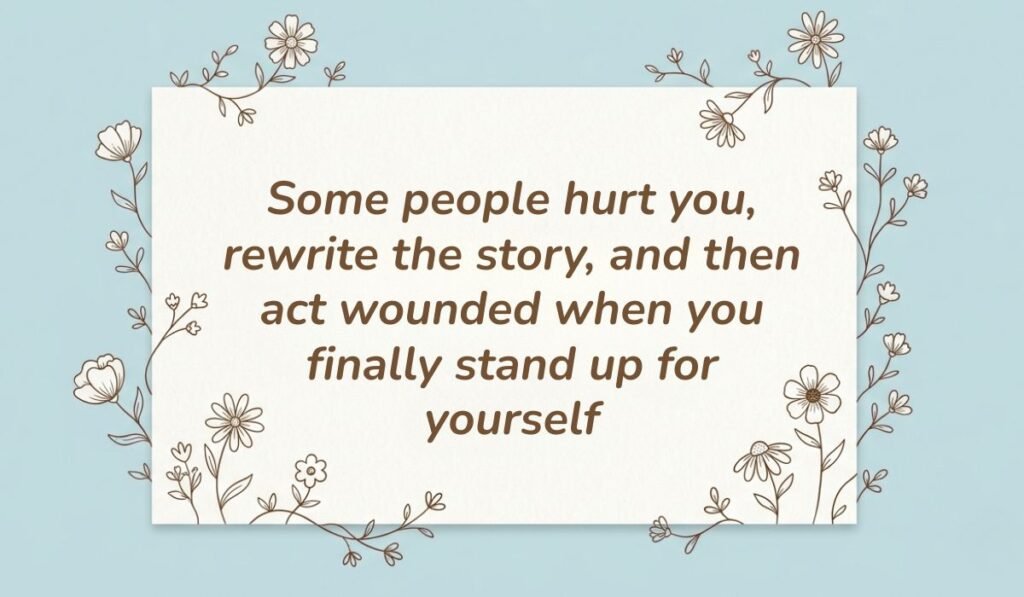
My ex told everyone I left. They skipped the part about why.
Some people never end a relationship. They just start a campaign.
Their new version of the story always begins right after the part where they were wrong.
They flip the script so smoothly that you start questioning your own memory.
A toxic ex can cheat and walk out, then tell the world you broke them.
Closure is not coming from someone who profits from your confusion.
Their sad posts show up right when you start moving on.
You don’t owe a rebuttal to anyone who believed the first version they heard.
The people who matter will ask for your side. The rest were already convinced.
Silence after a breakup is not guilt. Sometimes it’s just healing.
They rewrote the ending, but I remember the whole book.
Workplace Victim Mentality Quotes
Every team has one person whose problems are always somebody else’s fault.
A missed deadline somehow turns into a story about a bad manager and nothing about the person who missed it.
Playing the victim at work is a quiet way of avoiding the work.
The colleague who cries foul after every piece of feedback is protecting their ego, not their career.
Accountability at work sounds like “I missed it, here’s how I’ll fix it.”
Some people would rather be seen as mistreated than be seen as wrong.
Constructive criticism is not harassment, and pretending otherwise wears everyone out.
A team can carry one person’s complaints for only so long before the load shows.
When a coworker makes every disagreement personal, collaboration ends.
The people who grow fastest at work are the ones who say “my mistake” without being asked.
Document the facts. Facts calm every dramatic retelling.
You can be kind to a coworker and still refuse to cover for their excuses.
Quotes for Setting Boundaries With Victim-Playing People
“No” is a full sentence, and people who play the victim will treat it like an insult anyway.
A boundary is not a punishment. It’s information about what you’ll accept.
They may cry when you set a limit. Hold it anyway.
You don’t have to justify your boundaries to someone who benefits from you having none.
Stop explaining. Every explanation gives them something to argue with.
Their disappointment is not your emergency.
The guilt you feel after saying no does not mean you did something wrong.
If a boundary makes someone call you cruel, it probably worked.
Be kind in tone and firm in action.
You can care about someone’s feelings without managing them.
Peace sometimes costs you someone else’s approval.
Repeat the boundary calmly as many times as it takes, and add nothing new.
Quotes About Guilt-Tripping and Emotional Blackmail
Guilt used as leverage isn’t love. It’s control wearing a sad face.
“After everything I’ve done for you” is an invoice nobody agreed to.
Emotional blackmail sounds like concern until you notice who benefits.
If you only help to avoid the fallout, that isn’t generosity.
They threaten to fall apart so you’ll stay in line.
Real care never requires you to sacrifice yourself on demand.
The tears arrive right on schedule, usually just before you say no.
You are allowed to leave a conversation where you’re being manipulated into feeling bad.
Guilt is useful when you’ve done something wrong. When you haven’t, it’s a tool of control.
They make their feelings your job and yours irrelevant.
Someone who loves you won’t hold your kindness hostage.
Stop paying a debt you never owed.
Quotes on Crying Wolf and Fake Sympathy
The more often they cry wolf, the fewer people run when it matters.
Fake tears get attention once. After that, people notice the pattern.
Sympathy is not infinite, and false alarms spend it fastest.
When everything is a crisis, nothing is.
People who exaggerate every hardship make it harder for the ones who truly need help.
They were fine until someone was watching, and then they were devastated.
I used to rush in to help. Now I wait to see if there’s a real fire.
A performance for sympathy always checks who’s in the audience first.
Real pain doesn’t need an audience to prove itself.
Compassion should be given freely, not extracted by a show.
You can spot fake sympathy-seeking by how fast the story changes when the sympathy stops.
They cried wolf so often that I stopped hearing the howl.
Quotes About Real Victims vs. Fake Victims
Real victims ask for help. Fake ones ask for attention.
Someone truly hurt wants healing. Someone playing the role wants an audience.
Real victims often feel ashamed to talk about it. Fake victims can’t stop.
Genuine pain tends to make people quieter. Performed pain makes them louder.
A real victim can still admit their own mistakes.
Fake victims confuse consequences with cruelty.
Real victims need support. Fake victims need to win.
Never let manipulators make you doubt the people who are actually suffering.
Someone who has really been hurt usually doesn’t want anyone else hurt in return.
Real victims work toward recovery. Fake ones work toward getting even.
Telling the two apart takes patience, but the pattern always shows eventually.
Compassion for real victims means learning to see through the fake ones.
Captions for Calling Out Victim Behavior on Instagram
I’m not the villain. I just stopped playing the supporting role.
Your sad story has a plot hole. It’s you.
Accountability looks good on everyone.
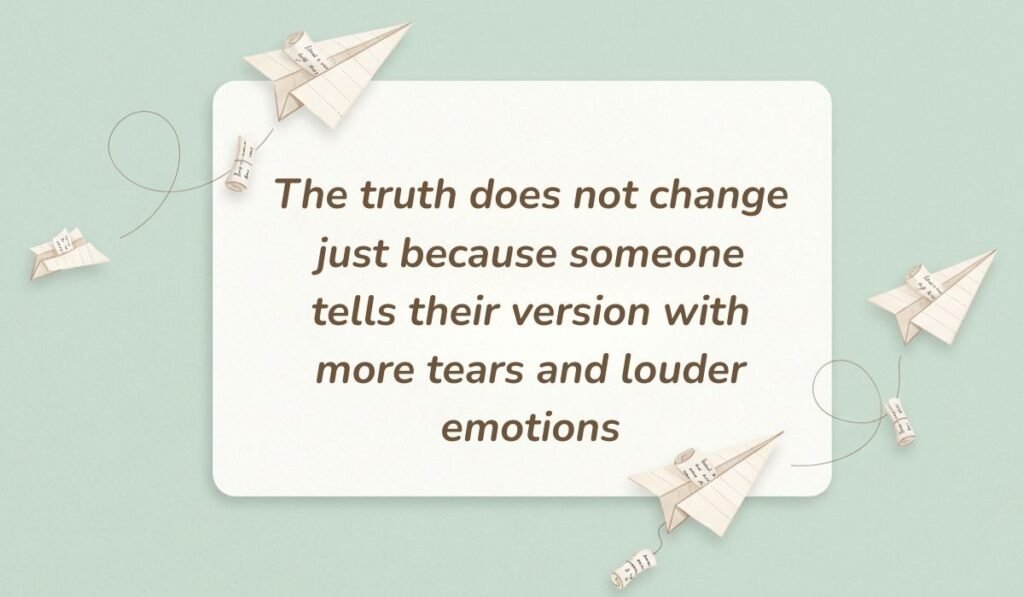
Tears don’t erase facts.
Not my circus, not my victim.
Receipts don’t lie. People do.
Stop crying over what you caused.
I don’t owe an apology for your choices.
Playing the victim won’t make you innocent.
Be accountable or be alone.
Done being the bad guy in your story.
Truth doesn’t need a sad soundtrack.
Short Status Lines About Fake Victims
Fake victims, real consequences.
Not every tear is honest.
Sympathy has a limit.
Blame is not a personality.
Own it or lose me.
Tell the whole story, not the edited one.
Fake pain, real manipulation.
Take responsibility or take a seat.
No more sympathy for repeat offenders.
Acting hurt isn’t the same as being hurt.
The truth showed up uninvited.
I see the act.
Quotes to Stop Feeling Guilty for Walking Away
Leaving someone who keeps hurting you doesn’t make you the cruel one.
You tried harder than they ever noticed.
Guilt is not proof that you were wrong.
You can wish them well from a distance.
Walking away is sometimes the only honest thing left.
You are not responsible for how someone interprets your absence.
They’ll tell the story their way. You get to live yours.
Peace feels strange at first, especially if chaos used to be normal.
Stop apologizing for protecting yourself.
You did not abandon them. You stopped abandoning yourself.
Closing the door quietly still counts as closing it.
One day the quiet will feel like relief instead of loss.
FAQs About Toxic Playing Victim Quotes
1. What do toxic playing victim quotes mean?
These quotes describe situations where someone avoids responsibility, shifts blame, or portrays themselves as the victim to gain sympathy or control a situation.
2. What behaviors do quotes about playing the victim highlight?
They often address blame-shifting, emotional manipulation, guilt-tripping, denial, and refusing to acknowledge personal mistakes.
3. Can these quotes help identify unhealthy relationships?
They can encourage reflection on repeated patterns of behavior, helping people recognize when accountability and honest communication are missing from a relationship.
4. When is it appropriate to share a quote about playing the victim?
You can share one when reflecting on difficult experiences, setting personal boundaries, or expressing thoughts about unhealthy behavior without directly targeting someone.
5. How can I use toxic playing victim quotes on social media?
Use them as captions, status updates, or story posts to communicate your perspective while keeping the wording thoughtful and focused on behavior rather than personal attacks.
Conclusion
Ever met a narcissist playing victim? Somehow they mess up and still end up as the sad hero of the story. That is victim mentality mixed with narcissistic behavior, and it is pure emotional manipulation. Their favorite move is blame shifting, which turns toxic relationships into a never-ending lack of accountability show where blaming others is the main sport. Real growth needs taking responsibility, but they hold on to the victim role like it is a free VIP pass. Good playing victim quotes can help you spot the manipulation tactics and toxic behavior early, before relationship problems pile up and emotional exhaustion hits. With deep wisdom and a little self love, you can also recognize unhealthy patterns while protecting your own well-being.
Keep an eye out for narcissistic traits like a false narrative where they play the poor soul, plus plain old accountability avoidance. Keep recognizing patterns, and guard your personal boundaries like your last slice of pizza.
Mr Zohaib is the founder and creator of Messages & Quote, a platform designed to help people express meaningful thoughts through personalized messages, letters, wishes, and speeches. He created the website to make finding the right words simple, personal, and genuine.